

At WellSky, the teams responsible for maintaining critical infrastructure have never been content to simply maintain the status quo. The Cloud Networking team, which supports the systems powering WellSky solutions, recently took that mindset in a new direction: building software.
The story starts at the annual WellSky Hackathon, where the team used two fast-paced days to develop an early concept. From there, a group of network engineers – not developers – built a fully hosted, accessible web application complete with SSL certificates and a live demo environment. Their tool: AI, used not just to support writing code, but also to review it and explore new feature ideas.
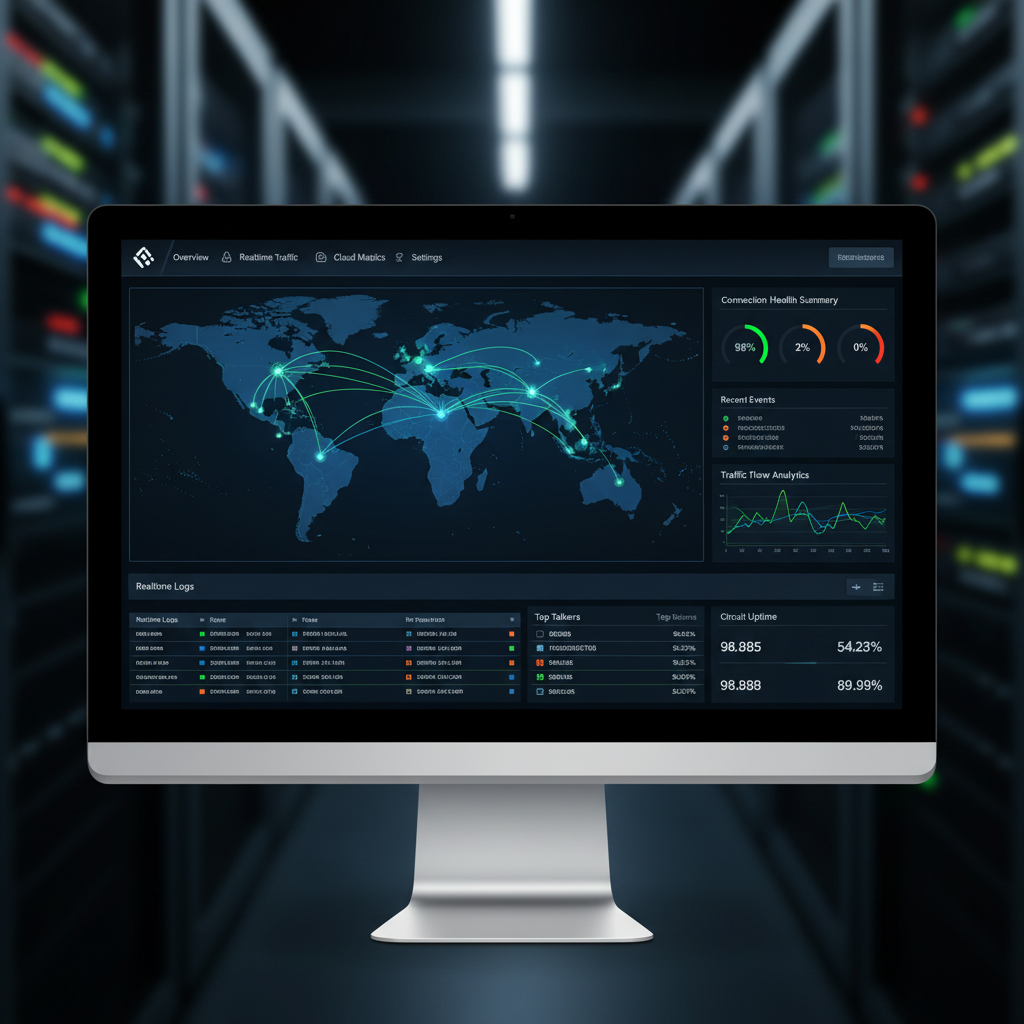
What they built was a network operations dashboard that gives teams across WellSky visibility into the health and status of the connections linking WellSky to its clients. At any given moment, support teams can see which connections are active, how long disruptions have lasted, where traffic is routed, and what logs show in real time. Instead of sifting through raw data or waiting for visibility after escalating an issue, teams now have a single pane of glass to orient themselves quickly.
That first application was impressive enough on its own. But what happened next is what signals a shift in how this team operates.
In the months following the Hackathon, the team evolved the application into something considerably more powerful: a second-generation platform that maps every network endpoint across the company, visualizes traffic flows, and displays circuit-level metrics as they happen. When a senior leader saw a demo and asked whether the team could add a Network Operations Center (NOC) view for a shared display, the team had a working feature ready within days.
What makes this remarkable is not just the feature, but the network engineers behind it. These are individuals who spend their careers deep in protocols and infrastructure, yet they built a full-stack application from scratch and iterated on it rapidly in response to feedback. AI served as an accelerant, helping the team write and review code, while the engineers remained in control, applying their domain expertise to shape what the tools do and why.
The work is still young, but the trajectory is clear and promising. Teams that have historically specialized in keeping connectivity reliable are now building the applications that make that connectivity easier to understand across the organization. At WellSky, the infrastructure team is not waiting to be served by software – they are building it.
