
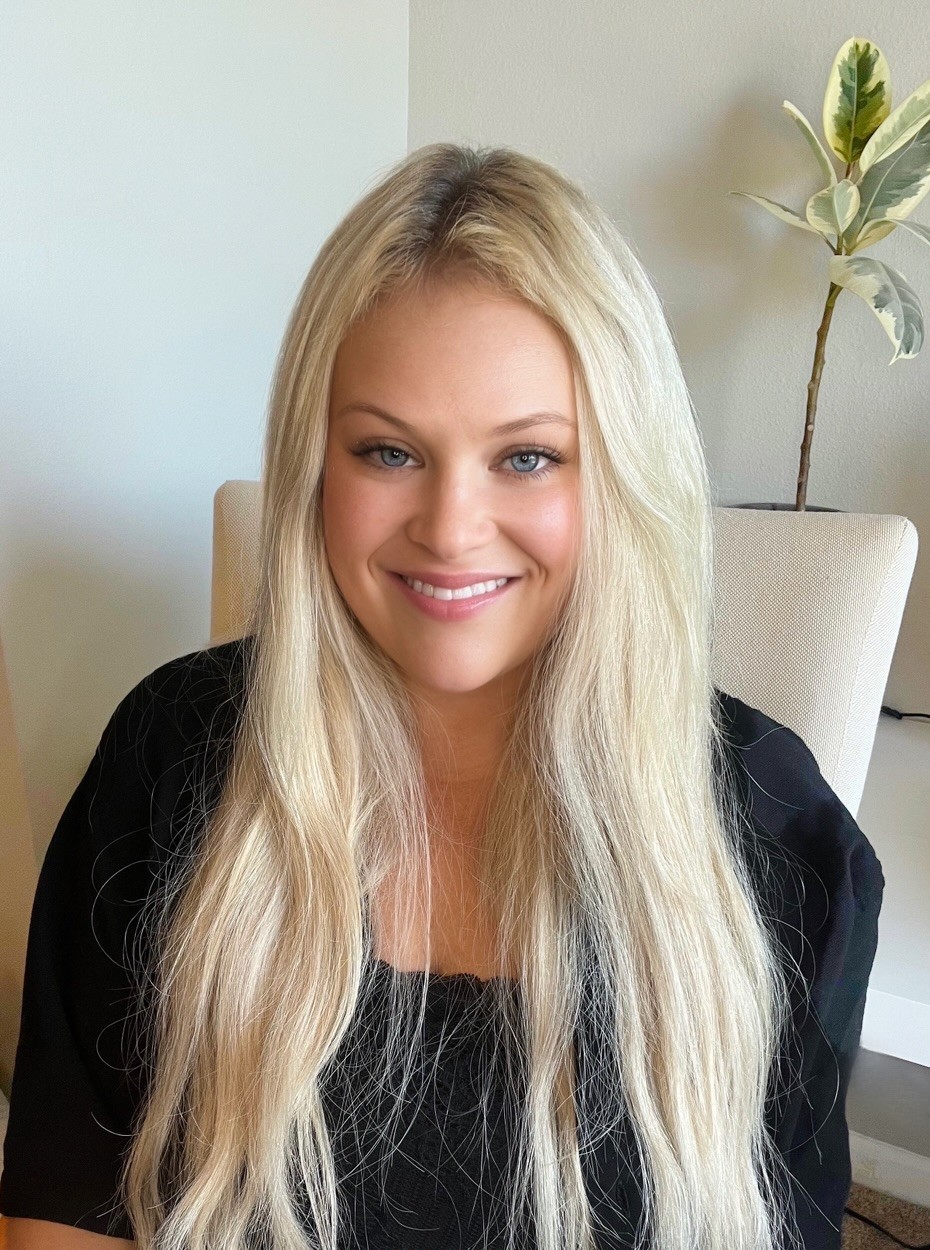
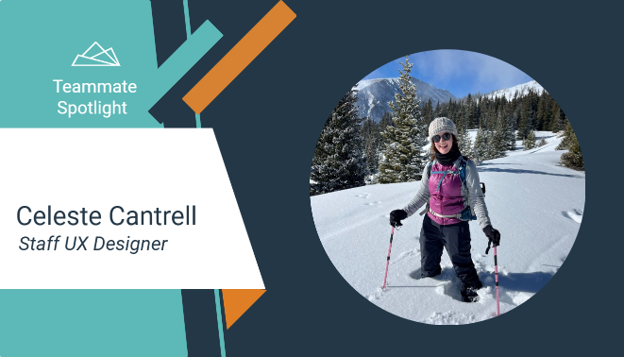
Celeste Cantrell’s path to UX design was not a straight line. Today, she is a Staff UX Designer based in Denver, Colorado. She brings a background in ethnographic anthropology to her work at WellSky, shaping how she learns from and designs for the clinicians we serve.
Celeste’s studies focused on human behavior and culture, but the early career that followed was in creative spaces, including work as an interior and floral designer and a cosmetologist. UX offered a way to combine both threads.
“UX felt like the perfect way to bring together my creative side and my desire to understand human behavior and solve problems,” she said.
After making the move, Celeste worked with a cloud consulting startup and several design agencies on short contracts across healthcare, nonprofit, education and large B2B enterprise clients. The variety was energizing, but it came with a trade-off.
“I liked the breadth, but I never had time to dig deep into one industry and understand its users before it was on to the next,” she said.
That desire to go deeper is what made WellSky standout for her.
“I was drawn to WellSky because of its mission,” she said. “I’m already passionate about the user, and knowing I could improve the lives of clinicians and help solve problems in healthcare really spoke to me.”
The culture reinforced that first impression.
“It was clear that people care – from the top down – about serving our clients, and that others are connected to the mission, too,” she said. “I also thought it was pretty cool to meet so many people with deep healthcare experience and knowledge.”
Over the past four and a half years, Celeste’s role has grown more strategic. The tools have changed along the way, too.
“It’s exciting to see how much more efficient our work has become with the changing AI landscape, and how easily teammates can now step into each other’s roles to try new things and learn new processes,” she said.
Keeping pace has stretched her in a good way.
“The pace of change in technology, especially with AI, keeps me on my toes,” she said. “It has pushed me to upskill and become more technical than I was before. That has been uncomfortable at times, but I’ve grown a lot, and I’ve had great support along the way.”
Her ethnography training has proven just as valuable. Celeste draws on her experience to conduct onsite discovery research and teach teammates how to observe users at work and ask the right questions.
“I think it has brought deeper insights into our design and development process,” she said.
Those insights came together in Celeste’s proudest accomplishment at WellSky, helping build Scribe, our ambient listening technology.
“From discovery to design to beta validation and into production, it’s been amazing to see our solution have a true impact on clinical documentation time,” she said. “I’m proud to have a hand in giving time back to clinicians and providing them with an easy-to-use mobile experience.”
Projects like Scribe are possible because WellSky leaves room to experiment, according to Celeste.
“What I love most is the space I’m given to explore methodology and approach different problems with different solutions,” she said. “WellSky welcomes innovation and thought leadership.”
She has built that leadership by sharing her work at internal conferences and mentoring others and credits her teammates for much of her growth.
“Many of my teammates are also my mentors,” she said. “There are so many people to learn from.”
For anyone considering WellSky, her advice is simple. “You’ll learn from collaborative people who really care about our users and clients,” she said. “If you’re the kind of person who sees a problem and wants to solve it, you’ll be given the space to do it.”
Away from the screen, Celeste is usually in the mountains with her two dogs, whether hiking, camping, swimming or snowboarding. Last winter, that included a summit of a 14,000-foot peak in the snow.
“I underestimated how hard it is to hike in snow, but I’m proud that I persevered, and the views were totally worth it,” she said.
Her newest pursuit is just as hands-on: liquid light projection, an analog technique that uses oil and food coloring on an old-school light projector to create colorful, moving visuals.
